
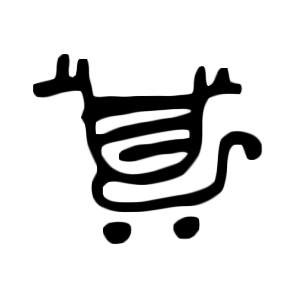
Knotwork Paw of the Boar Poster


Worldwide Shipping
● Production time 4-7 business days
● Estimated delivery 2-3 weeks

Custom Made
● Frame not included
● The main picture is illustrative, switch between sizes to see actual sizes
● Handmade in Latvia or USA (depending on your location)
● Type P item
Learn more
Product Information
Matte paper with fibrous texture sourced from Japan
Thicker paper with weight of 189 g/m² and thickness of 10.3 mil (0.26 mm)
High details with bright whites and dark shadows
Distressed texture, not plain black and white
Frame is not included
The story & symbolism
This one is centered around the Svinfylking, a formation and unit name. Also known as boar warriors who had boars ontop of their helmets and would be the two front-most warriors in rhe Svinfylking formation which was a triangle shaped one to penetrate through enemy forces.
Svinfylking is actually an offensive battle strategy used during Scandinavian Ironage and by (amongst others) the Vikings. The old Norse word "Svinfylking" translates into "Boar snout", and if you look at the formation of this technique you'll see why.
It was said to be just as powerful as an angry boar. The triangular shape of the middle formation was a successful tactic to break through the enemy's armies. So why are we writing about this historical tactical move in this blogpost about the warriors of the gods?
There are several indications that boars have played a huge role during Scandinavian Iron Age, and they are often times found in connection to war and warriors. Even though the tactical move Svinfylking isn't a type of warrior per se, it tells us a story about how much these animals were connected to war. The god Freyr is heavily connected to boars and has his own war-boar named Gullinbursti. There has been archaeological finds of iron age helmets decorated with boars, one very famous example of this is the Torslunda Plates. Where you can see boar-warriors getting ready for battle. As long with the Vendel Era helmet from the area that gave the period its name: Vendel. This helmet is decorated with a big boar that turns into a human face in the front. Maybe it could be linked depicting Freyr and Gullinbursti riding into battle?
Svinfylking is actually an offensive battle strategy used during Scandinavian Ironage and by (amongst others) the Vikings. The old Norse word "Svinfylking" translates into "Boar snout", and if you look at the formation of this technique you'll see why.
It was said to be just as powerful as an angry boar. The triangular shape of the middle formation was a successful tactic to break through the enemy's armies. So why are we writing about this historical tactical move in this blogpost about the warriors of the gods?
There are several indications that boars have played a huge role during Scandinavian Iron Age, and they are often times found in connection to war and warriors. Even though the tactical move Svinfylking isn't a type of warrior per se, it tells us a story about how much these animals were connected to war. The god Freyr is heavily connected to boars and has his own war-boar named Gullinbursti. There has been archaeological finds of iron age helmets decorated with boars, one very famous example of this is the Torslunda Plates. Where you can see boar-warriors getting ready for battle. As long with the Vendel Era helmet from the area that gave the period its name: Vendel. This helmet is decorated with a big boar that turns into a human face in the front. Maybe it could be linked depicting Freyr and Gullinbursti riding into battle?
Knotwork Paw of the Boar Poster
Worldwide Shipping
● Production time 4-7 business days
● Estimated delivery 2-3 weeks
Custom Made
● Frame not included
● The main picture is illustrative, switch between sizes to see actual sizes
● Handmade in Latvia or USA (depending on your location)
● Type P item
Learn more
Size Chart
×
 Upperbody
 Lowebody
Where to measure on upper- and lowerbody. W stands for width or waist and H for height, check below for a more detailed guide on how to measure
| Size |
|---|
How to measure
Items are measured by being laid flat on the ground, not by circumference. If you have any items that fit you well, lay them on the ground and measure them to get the best fit
Here's a small video I made for the sweatshirt, pants, hoodies - the same applies for all the other apparel items as well
Here's a small video I made for the sweatshirt, pants, hoodies - the same applies for all the other apparel items as well
DON'T MISS OUT!
Sign up to get the latest news on discounts, freebies, articles and releases!
Also Heimdallr has replaced the Gjallahorn with an email service, so we'll notify you through this when Ragnarok starts
Also Heimdallr has replaced the Gjallahorn with an email service, so we'll notify you through this when Ragnarok starts